The Most Common Mistakes When Preparing for the NMT

For every eleventh grader and their parents, the abbreviation NMT sounds like a challenge that requires not only knowledge but also great endurance. It is a period when a teenager’s “why do I need this?” meets the reality of adult choices. However, in the race for desired scores, future applicants often take steps that lead not to success but to exhaustion. Preparation should not be a survival struggle, but a conscious path toward a goal. Understanding common pitfalls helps maintain emotional stability and achieve the best results.

Poor Planning — Chaos

The biggest mistake often begins at the very start: trying to learn everything at once without clear priorities. When a student jumps from math to history, attempting to cover several complex topics in one evening, the brain switches into a protective slowdown mode. Chaotic studying creates the illusion of productivity but does not lead to deep understanding. Without structure, even the most talented student risks getting lost in the volume of information.

Lack of planning usually shows up in small details that later turn into bigger problems. Parents should pay attention to whether their child is making these mistakes:

  • ignoring topics that seem “too easy” or “too difficult”
  • lack of regular revision of previously studied material
  • trying to study only at night, which harms cognitive abilities
  • not practicing with timed mock tests
  • using unreliable sources instead of official programs

Such time management inevitably leads to a growing backlog. In our institution, we teach children to build a partnership with their time, where teachers act as tutors, helping each student develop an individual learning path.

Lack of System

Systematic learning is not just about having a schedule—it is about understanding connections between topics. If a student memorizes facts without grasping cause-and-effect relationships, the knowledge disappears as soon as the book is closed. At “My Horizons,” we focus on helping students understand the logic of each subject. Mathematics is not just a set of formulas—it is a tool for thinking; history is not just a list of dates—it is a living process. A systematic approach allows students to see the bigger picture, making any test much easier to pass.
Overwork — Risks

Many believe that the more hours spent studying, the higher the score. However, human capacity has its limits. When studying happens under pressure and at the edge of physical endurance, efficiency drops almost to zero. Overwork is a hidden enemy that steals concentration and memory exactly when they are needed most.

We often see how the fear of not meeting expectations pushes teenagers to give up walks, sports, and even proper sleep. But without quality recovery, the brain simply stops forming new neural connections. Within our lyceum, we create a supportive environment where psychological guidance helps students cope with exam anxiety.

To recognize dangerous overload in time, watch for these warning signs:

  • constant irritability or apathy toward activities once enjoyed
  • sleep disturbances: difficulty falling asleep or persistent fatigue
  • frequent headaches and weakened immunity

If these symptoms are ignored, the body may “shut down,” leading to serious consequences—even during the exam itself. We want every child to understand: they are created with purpose, and their talents require care, not exhaustion.

Burnout

Burnout is not just tiredness—it is a loss of meaning. When NMT preparation becomes the only focus in a teenager’s life, they lose connection with themselves and their dreams. This is especially dangerous for ambitious students striving for perfection. To avoid this, it is important to maintain balance between studying and other areas of life.

A healthy preparation rhythm includes simple but effective rules:

  • the 50/10 rule: every 50 minutes of study should be followed by a 10-minute complete break from gadgets and books
  • regular “quiet days,” when preparation is paused for family, nature, or hobbies
  • proper nutrition and hydration, which we carefully monitor in our lyceum

Following these principles allows students to reach the finish line not exhausted, but energized and ready to succeed. Academic achievements at “My Horizons” always go hand in hand with moral education and Christian values.
Summer Development: Math on the Beach and Language in the Forest

Summer gives children a unique space for development. During the warm season, learning can move beyond the table, notebooks, and the usual “scheduled lessons.” That is why many parents notice that on vacation, a child learns just as much—and sometimes even more—than in a traditional format. It simply happens differently: through play, movement, observation, and genuine interest in the world around them.

When a child counts seashells on the beach, compares leaves in the park, invents stories about forest creatures, or looks for words starting with a certain letter during a walk, they are not just playing. They are developing thinking, speech, attention, memory, and the ability to recognize connections. That is why summer development can be natural, light, and at the same time truly effective.

Why Summer Is Ideal for Learning Through Life

In summer, children move more, see more, and encounter real-life situations where knowledge becomes meaningful. Math is no longer just numbers in a row, and language is no longer an exercise from a textbook. Everything becomes practical: to count, compare, name, describe, invent, and discover.

That is why parents should not worry that a child will “forget everything” over the summer without daily assignments. What matters more is giving them the opportunity to see learning in everyday things. When there is interest, new information is absorbed more easily and retained longer.

To make summer support development, it is helpful to:

  • ask simple questions during walks
  • involve the child in small observations and counting
  • talk about what they see around them
  • avoid rushing to give ready-made answers

In such moments, the child does not feel like they are being taught. For them, it is a game, a conversation, and a small discovery—while for parents, it is a natural way to support development without pressure.

Math on the Beach

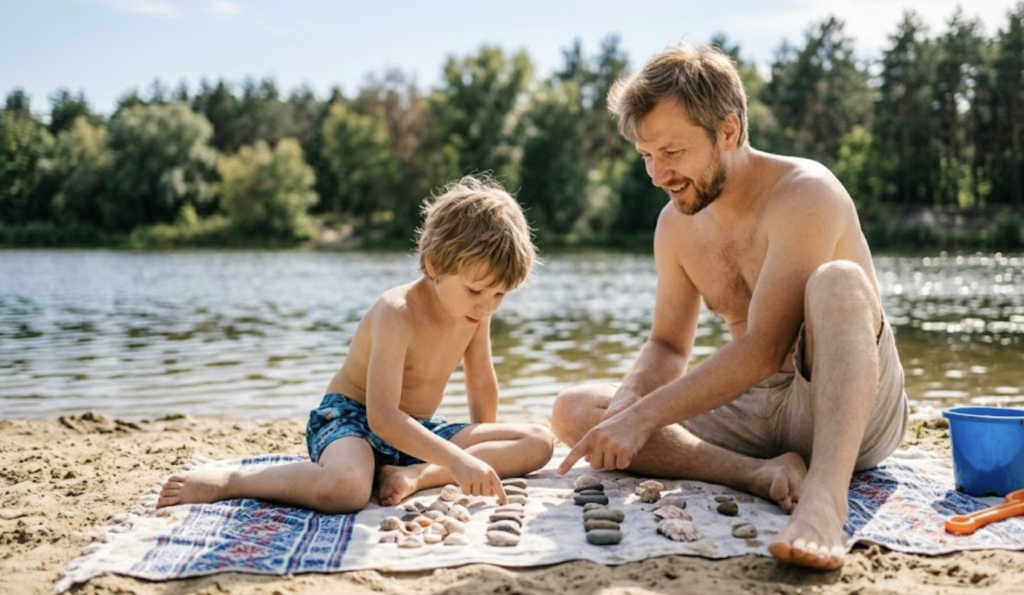
A beach or shoreline is a perfect place for simple summer math. Children can count shells, stones, waves, steps to the water, or footprints in the sand. They can compare what is more or less, heavier or lighter, longer or shorter, rounder or smoother. For a child, it feels like a fun game, while at the same time training logic and attention.

Simple ideas that work well:

  • collect 5 shells and add 2 more
  • arrange stones from smallest to largest
  • count how many steps it takes to reach the water
  • find objects of the same shape

These actions help children better understand numbers, quantity, sequences, and basic mathematical relationships—all without the feeling of a lesson.

Counting and Comparing

At the beach, children naturally learn to compare objects. Which shell is bigger, how many stones are needed to make ten, what is more—smooth or rough items. Through such simple activities, a sense of quantity and attention to detail develops.

Language in the Forest

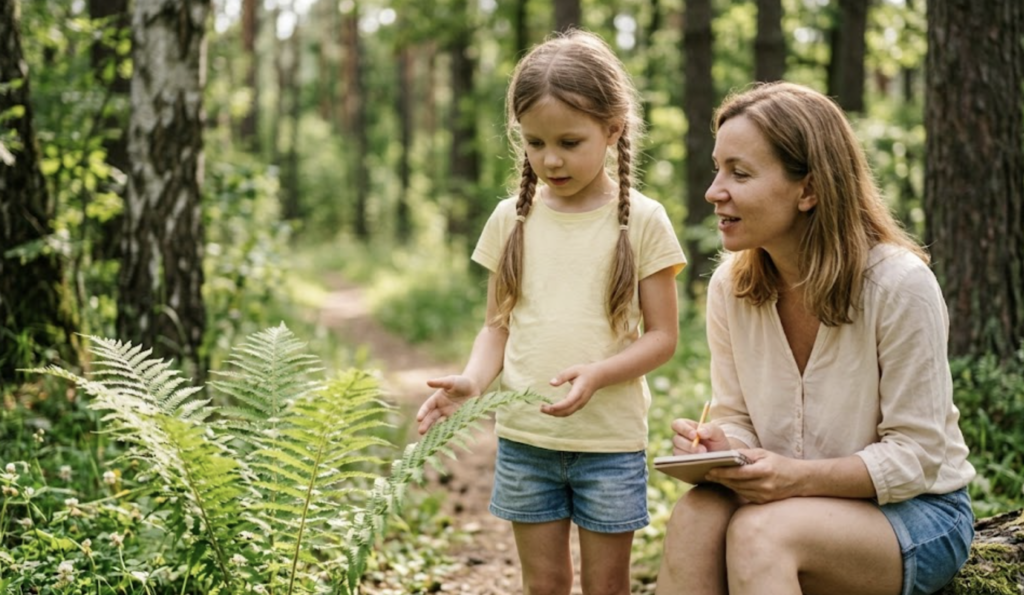
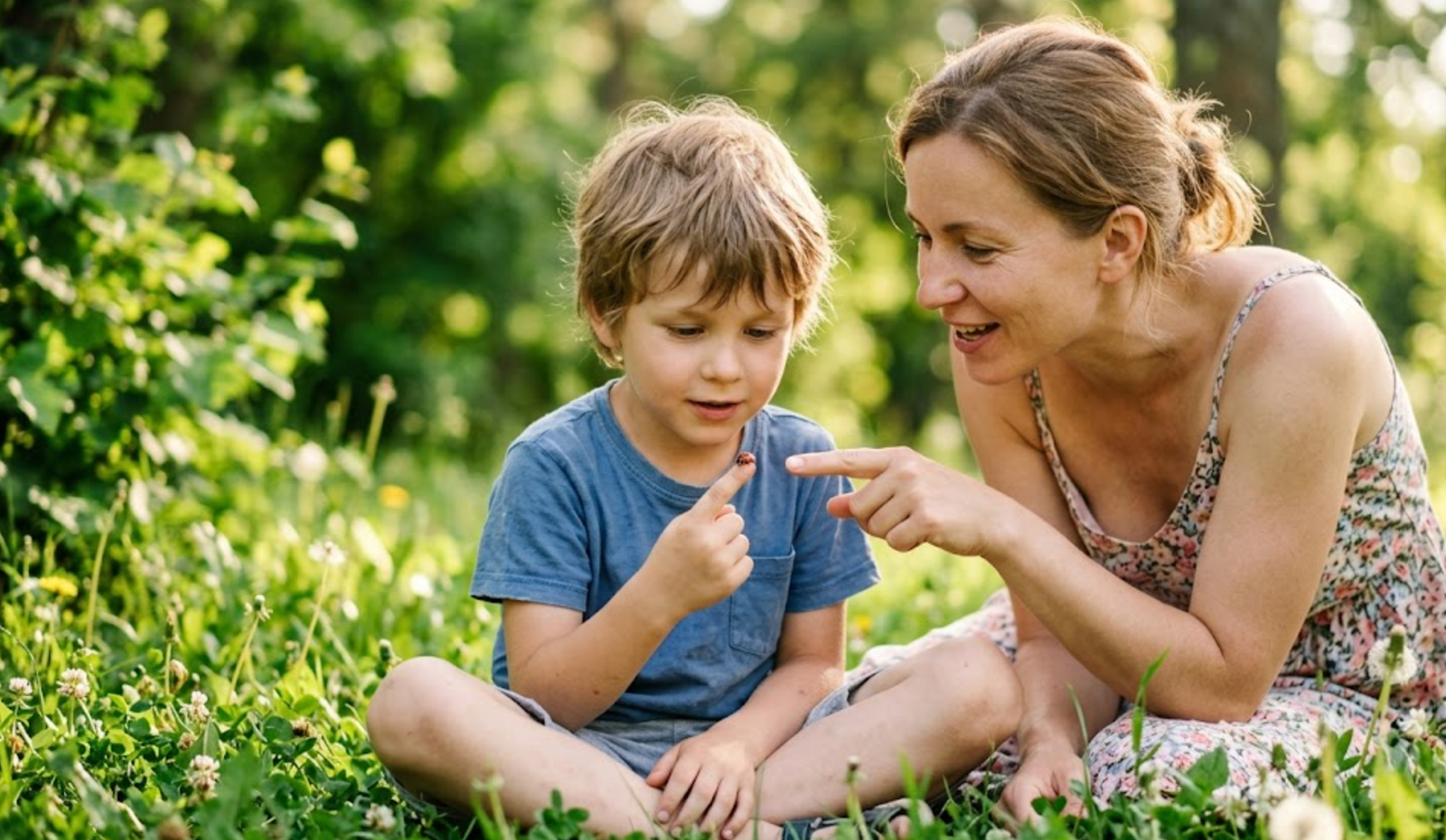
A forest, park, or any green area is ideal for language development. Here, a child sees many new things—and therefore has something to talk about. You can describe trees, leaves, smells, and sounds, look for words starting with a certain letter, choose adjectives, or invent short stories about birds, insects, or forest creatures.

These walks are especially helpful for children who find it difficult to sit still for long. In motion, it is often easier for them to think, speak, and remember. Language develops when a child not only repeats words but uses them in a real context.

During a walk, you can:

  • ask the child to describe what they see in three words
  • find objects that start with a specific sound
  • invent a short story about a tree or a path
  • play “who can name more words” on a chosen topic

These games enrich vocabulary and help children express their thoughts more freely.

Observation and Words

Language development is closely connected with observation. The more a child notices, the more they want to name what they see. That is why a walk in the forest can become a perfect opportunity to develop speech naturally, without any pressure.

How to Make Summer Development Natural

The most important thing is not to turn every walk into a lesson. If an adult tries too hard to make everything “educational,” the child quickly loses interest. It is better to keep a sense of ease, playfulness, and joy in shared time. A few well-placed questions, one small task, or a short game along the way is enough.

Summer development works best when it is woven into everyday life. On the beach—counting, in the forest—talking, in the yard—comparing, during a walk—observing. These simple moments create real learning that does not exhaust but inspires.

Summer gives parents a wonderful opportunity to show their child that development does not exist only in books and notebooks. It is all around—in shells, waves, leaves, shadows, stones, words, and conversations. And when adults notice these opportunities, an ordinary day turns into a small adventure where a child grows easily, naturally, and with curiosity about the world.

Summer Wellness Marathon: Routine, Summer Wardrobe, Safety Above All

Summer for a child is a time of sunshine, movement, fresh air, and new experiences. It is during this season that you can effectively strengthen health, restore energy after the school year, and give the body what it often lacks during colder months. However, summer wellness doesn’t happen on its own. It begins with simple daily decisions: when the child goes to bed, what they wear, how much time they spend outdoors, and how attentive adults are to safety.

If summer passes chaotically, even the best weather won’t bring full benefits. The child may become overtired, overheated, sleep too little, or spend too much time without supervision. That is why summer should be approached as a true wellness marathon—not overly strict, but consistent and thoughtfully organized.

Daily Routine — The Foundation of Well-Being

In summer, we all want more freedom, but children still need a clear daily rhythm. Proper sleep, regular meals, outdoor walks, and time to rest help the body recover. If a child goes to bed too late, skips meals, and remains in a constant state of overstimulation, even an active summer quickly becomes exhausting.

Sleep is especially important. At night, a child’s body restores energy, and the nervous system gets the rest it needs. Therefore, a summer routine should not mean a complete lack of structure. On the contrary, a calm and predictable day helps a child stay energetic, attentive, and balanced.

To maintain a healthy rhythm, it is worth paying attention to:

  • consistent bedtime and wake-up time
  • balance between activity and rest
  • sufficient outdoor time
  • regular water intake throughout the day

When these elements are in place, children tolerate heat better, sleep more soundly, and experience less fatigue even during a busy summer.

Summer Wardrobe — Comfort and Protection

Summer clothing for children should not only be attractive but, above all, comfortable and safe. In hot weather, it is important that the body does not overheat and the skin can breathe. Heavy fabrics, dark colors, or uncomfortable shoes quickly cause discomfort and can ruin even a pleasant walk.

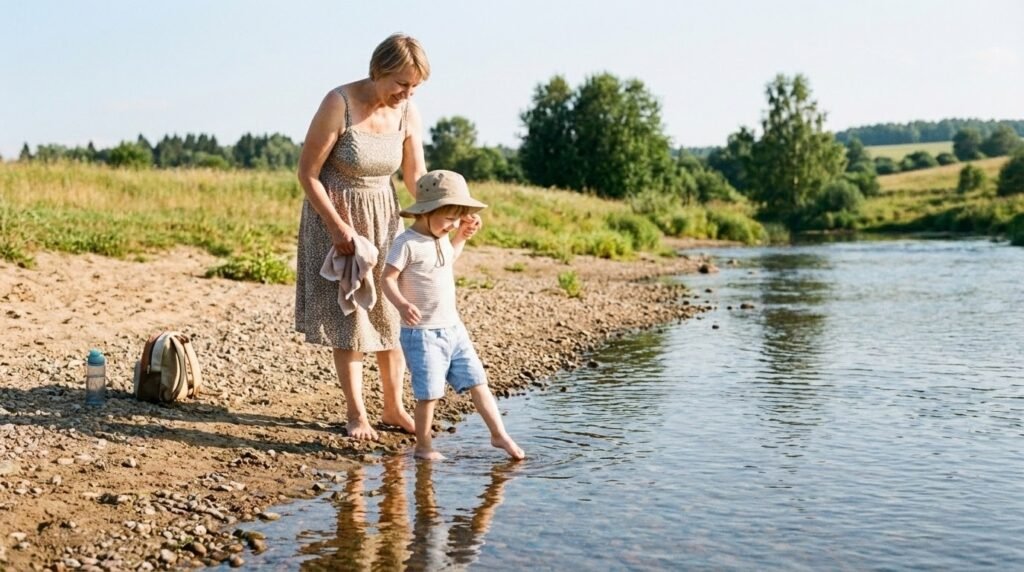
Special attention should be given to sun protection. A panama hat, cap, or any head covering in summer is not a minor detail—it is a necessity. The same applies to clothing for active recreation near water, in parks, or outdoors: items should be light, allow freedom of movement, and at the same time protect from overheating and minor injuries.

Key elements of a child’s summer wardrobe include:

  • lightweight clothing made from natural or breathable fabrics
  • a head covering for outdoor activities
  • a change of clothes for active play
  • comfortable shoes suitable for movement

These simple details form the basis of daily comfort—and with it, overall well-being.

Summer Safety — Sun, Water, Insects, Plants

Summer safety requires special attention. The sun, water, nature, and active games bring a lot of joy but also create additional risks. Children often cannot assess danger on their own, so adults must not only supervise but also gradually teach simple safety rules.

During summer, it is especially important to remember:

  • avoid prolonged exposure to direct sunlight during peak heat hours
  • never leave a child unattended near water
  • check the skin after outdoor walks
  • explain that unknown plants should not be touched or tasted

Insects, thorny plants, allergic reactions, slippery riverbanks, or excessive sun exposure are not reasons to avoid summer—they are reasons to be more attentive. When a child hears calm and clear guidance, they gradually learn to take care of themselves without unnecessary fear.

Hardening — Gently and Without Pressure

Summer is a great time for hardening (gradual strengthening of the body), but it is important not to rush. Hardening should not be stressful for a child. Its essence lies in gradual adaptation. Fresh air, walking barefoot on safe surfaces, water play, washing with cool water, and outdoor activity—all of these can become part of natural body strengthening.

Hardening works best when it becomes a natural part of daily life—without extreme experiments, without testing endurance, and without pressure. A child should feel energized, not struggle with discomfort. That is why adults should rely not on loud advice, but on common sense, the child’s age, and their well-being.

The summer wellness marathon is not about one big decision but about many small daily choices. Sleep, clothing, water, movement, safe walks, awareness of nature, and gentle hardening together create the foundation of a child’s health. And when summer follows this rhythm, it truly becomes a time of recovery, growth, and healthy habits that stay with the child for a long time.

Summer Club for Children at Kindergarten: How to Spend the Holidays Productively

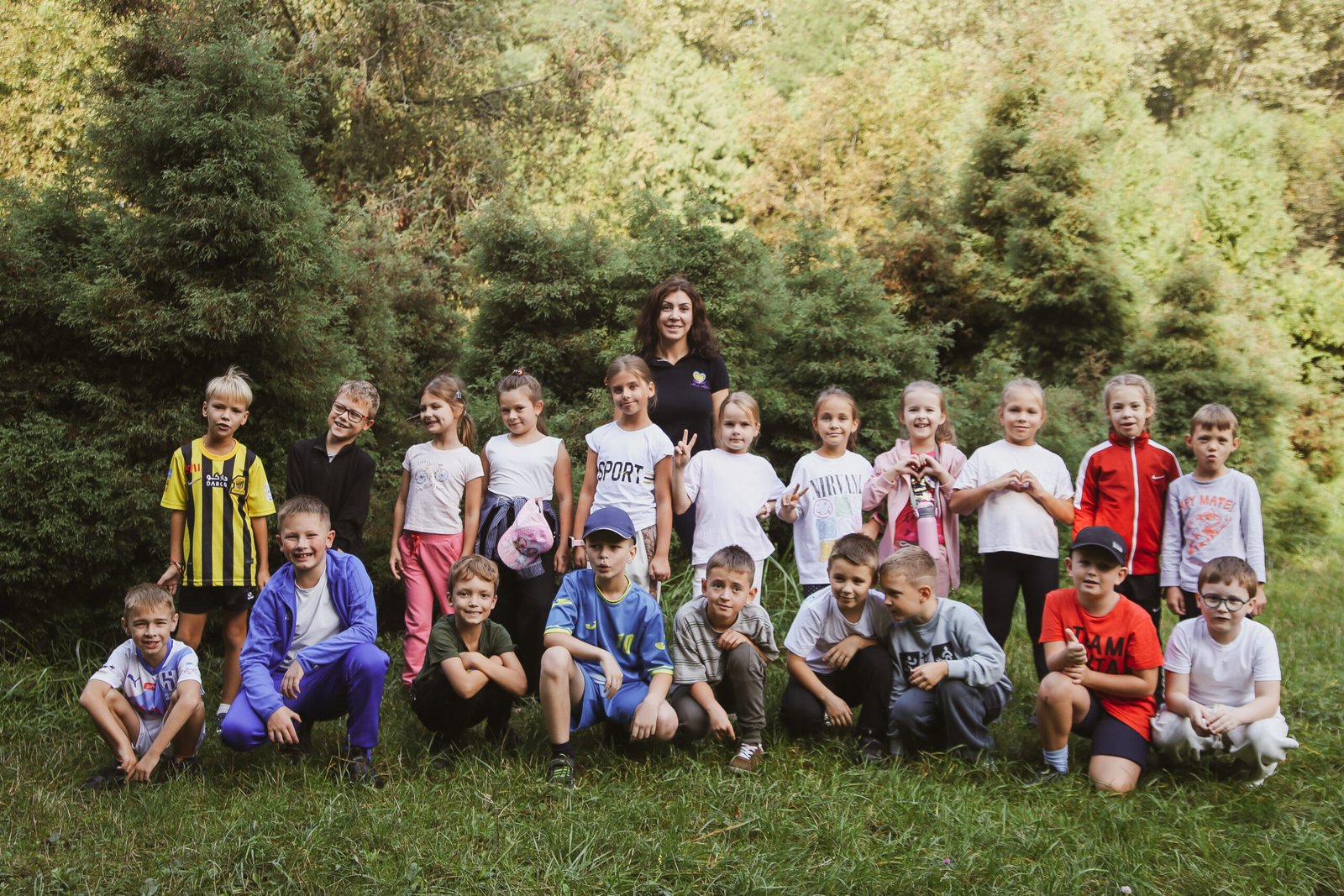
Summer is a time when a child’s soul needs a special space for joy and discovery. When regular classes come to an end, parents often look for ways to organize their child’s leisure so it doesn’t turn into simply “waiting for the evening.” The summer club at the kindergarten “My Horizons” is not just childcare—it is a whole philosophy of summer recreation, where each day is filled with meaning and new emotions. We strive to make this period a time for children to раскрыть their talents in an atmosphere of complete safety and care.

What Is a Summer Club at Kindergarten — Format and Features

A summer club is a special format of organizing a child’s daily life, which differs significantly from the academic year. While during autumn and winter we focus more on basic school preparation, in summer the priority is emotional recovery and practical exploration of the world through play. This is a licensed educational institution in Khmelnytskyi, where the integration of experience and the creativity of educators provides each child with an individualized learning environment.

Differences from a Regular Kindergarten

The main difference is the absence of rigid academic boundaries. The club is filled with a spirit of adventure: we spend more time outdoors, organize themed weeks, and allow children to be active participants in the process. It is not just a group where children play with toys; it is a community of young explorers who take a step forward into a new stage of life every day.

Here are some key features that make the summer club at “My Horizons” a unique place:

  • A combination of modern personal development programs with proprietary and innovative educational approaches
  • Emphasis on Christian values that help shape strong character traits in children
  • Building a foundation for a successful future by раскрытие individual potential
  • Care for each child in a cozy and safe environment

This format allows children to feel freedom of choice while remaining under the supervision of an experienced team of professionals. Parents can feel at ease knowing their “treasure” is in safe hands.

Learning Format

During the summer, activities take place in the form of interactive games and engaging projects. We don’t sit at desks—we explore the laws of nature by observing insects in the garden, take part in creative workshops, and learn through hands-on experience. This allows knowledge to be absorbed naturally, without pressure or coercion.

Benefits for Child Development — Socialization and Skills

The summer period is an ideal time to develop “soft skills” that are essential in the modern world. When a child is not ограничен строгим расписанием уроков, they begin to express leadership qualities more actively and learn to cooperate with others. Our experience shows that it is during summer that children make the greatest progress in developing emotional intelligence.

Communication

At the summer club, children meet new friends, which stimulates their communication skills. They take part in interactive games that teach teamwork and respect for others’ opinions. This is important for building a confident and well-rounded personality.

Independence

We encourage children to make independent decisions—from choosing games to helping organize group activities. This fosters responsibility and the belief that they can influence the world around them. When a child sees the results of their efforts, their self-esteem grows, and fear of new challenges fades away.

Дитина отримує допомогу вихователя та психолога для комфортної адаптації у садочку.

A Day at the Club — Daily Structure

The day at the summer club is designed so that children gain plenty of impressions without becoming overtired. We carefully balance energy levels by alternating active games with rest and creative activities.

Activities

The morning begins with energetic exercises and a morning circle, where children share their plans and dreams for the day. Throughout the day, they participate in a variety of activities that stimulate both physical and intellectual development.

Our activity program includes:

  • Themed quests and outdoor games to strengthen immunity
  • Creative workshops where children discover their God-given talents
  • Excursions and nature observation within our facility

These activities help children experience joy in every moment. We aim for each child to find what truly inspires them.

Rest

After lunch, prepared by our kitchen with special care, there is always time for a quiet hour or calm reading. This allows the nervous system to “reset” and better absorb the impressions of the day. We understand that successful development is impossible without proper recovery.

Our philosophy is simple: we prepare children for a life filled with joy and success. We believe that love and the right environment transform children’s hearts—hearts that will one day change the world. We invite you to discover the summer club at “My Horizons” and give your child an unforgettable summer full of light and new discoveries.

Games for Preschool Development at Home

The space of an apartment or house often seems to us, adults, like an ordinary place for daily life, but for a preschooler it is a true laboratory. Every pot in the kitchen, every pillow in the living room, or even simple colorful socks can become the main characters in an exciting game. The most important thing in home learning is not the number of expensive toys, but your willingness to forget about chores for a few minutes and immerse yourself in your child’s world.

Educational Games — Thinking

A child’s thinking develops through concrete actions. While they touch, twist, stack, or scatter objects, millions of new neural connections are formed in their brain. The task of parents at home is not so much to “teach” as to create conditions where this natural curiosity is encouraged. It is important to give the child the opportunity to find solutions independently, even if they seem completely obvious to you.

When we teach a child to think independently, we give them far more than just knowledge of facts. We give them a tool for adapting to the future.

Logic

Logical thinking is the ability to see patterns and hidden connections. In preschool age, it is best developed through simple sorting and classification of objects. There is no need to buy special cards or expensive sets. Look around, and you will find dozens of objects for developing logic right at your fingertips.

Here are a few ideas to engage your child while stimulating their mind:

  • “What doesn’t belong?” Place three apples and one spoon in front of the child. Let them not only point to the odd item but also explain why the spoon doesn’t belong.
  • “Treasure hunt” Describe an object in the room by its features (for example: red, round, soft), and the child has to guess and bring it to you.
  • “Continue the sequence” Create a pattern using buttons or colored pencils (blue, yellow, blue…) and ask the child to add the next element.
  • “Sort by feature” Ask the child to put toys away not just into one box, but to sort them by color, shape, or material (wooden separately from plastic).

These exercises help the child focus and teach them to notice small details. It is important not to correct the child immediately if they make a mistake. Instead, ask: “Why did you decide to put this button here?” — giving them a chance to find their own reasoning and correct themselves.

Сучасні навчальні програми у приватному садку «МОЇ Обрії», Хмельницький

Active Games — Movement

Movement is the foundation of life, and for a preschooler this phrase has a literal meaning. Physical activity at this age is directly connected to intellectual development. When a child runs, jumps, or tries to keep balance, their brain learns to process signals from the vestibular system and muscles. At home, where space is often limited, it is important to come up with games that are safe yet sufficiently active.

Constant activity helps a child better understand their body boundaries and teaches them to manage their energy.

Coordination

The ability to control one’s body gives a child confidence not only on the playground but also in everyday life. Coordination is not only about sports—it is also about being careful, sensing boundaries, and avoiding injuries. Even an ordinary pillow placed on the floor can become an “island” that the child must jump onto accurately to avoid falling into the “ocean” of cold laminate flooring.

You can try the following active games:

  • “Tightrope walker” Stick a line of masking tape on the floor and ask the child to walk along it with arms stretched out, as if performing in a circus.
  • “Obstacle course” Build a route with chairs to crawl under and boxes to carefully jump into.
  • “Mirror” Stand opposite the child and make slow movements with your arms or legs, while the child tries to copy them as accurately as possible, synchronizing with you.

Such activities allow the child to release accumulated energy, especially when it’s raining outside and a walk is canceled. The key is to remember safety precautions and remove sharp or fragile objects from the path of your little explorer.

Playing together at home makes the bond between parents and children much stronger. For a child, nothing is more valuable than your full presence and attention. Don’t be afraid to be funny, invent unusual rules, and sincerely celebrate your child’s small achievements. Each such moment is an important brick in the foundation of their happy and harmonious future.

A Child’s Emotional Development: The Role of Parents

A child’s emotional development begins long before they can clearly explain their feelings in words. From an early age, they read adults’ reactions, learn to understand tone of voice, sense the mood of those close to them, and gradually begin to notice what is happening inside themselves. That is why the role of parents in this process is truly significant: a child first discovers the world of emotions through daily interaction with their family.

Parents don’t need to be psychologists to support their child in this area. What matters far more is being attentive, calm, and open to genuine communication. When adults do not ignore a child’s feelings, do not mock them, and do not dismiss them, the child gradually learns to understand themselves. This becomes the foundation for confidence, inner balance, and healthy relationships with others.

Understanding Emotions — The Foundation

It is very important for a child to learn to notice what they are feeling. Young children often react through their bodies and behavior: they cry, get angry, withdraw, or, on the contrary, become overly active. Behind these reactions are emotions they cannot yet properly name. This is where adult support is essential.

When parents calmly verbalize what they observe, the child gradually learns to distinguish their inner states. For example, they begin to understand the difference between hurt and fatigue, between fear and shame, between joy and excitement. This is a crucial process, because without it, a child finds it difficult to manage their reactions.

In everyday life, simple things help:

  • naming emotions with words;
  • explaining that all feelings are normal;
  • showing that even strong emotions can be experienced calmly.

After such conversations, the child becomes more attentive to themselves. They not only trust the adult more but also begin to better understand what is happening to them in different situations.

Логопедичні заняття у приватному садку «МОЇ Обрії», Хмельницький

Empathy

Empathy grows from the ability to see not only oneself but also others. However, for a child, this does not appear automatically. They learn to empathize when they themselves experience acceptance. When their feelings are acknowledged, they gradually begin to notice the feelings of others.

Empathy is shaped in everyday moments. When parents pay attention to another person’s state, talk about feelings, and demonstrate a gentle response to someone else’s pain or joy, the child absorbs this model. They begin to better understand friends, siblings, and others, learning not only to speak but also to listen.

How to Support — Practical Tips

Supporting a child’s emotional development does not require complex methods. Most often, it consists of everyday moments in which an adult is present and responds genuinely, not formally. It is important for a child to know that at home they are allowed to be different: sad, angry, joyful, or tired. And that the love of adults does not disappear because of their tears or difficult moods.

It is helpful for parents to remember a few simple things:

  • listen to the child fully, without interrupting;
  • do not shame them for tears, fear, or hurt;
  • help them express their feelings with words;
  • show by example how to handle emotions;
  • do not expect constant “convenience” from the child.

This does not bring instant results in a single day. But over time, it creates an environment in which the child feels safe and learns to better understand themselves and others.

Communication

Genuine communication remains the main pillar of emotional development. When parents make time for simple conversations without rushing, without phones, and without judgment, the child feels real connection. Sometimes this alone is enough for them to open up and share what is bothering them.

It is important not only to ask questions but also to be ready to hear the answers. Not all children’s emotions are comfortable for adults. But it is precisely in these moments that trust is built. When a child knows they will not be judged for fear, jealousy, anger, or tears, they do not hide their feelings—they learn to experience them honestly and calmly.

A child’s emotional development begins in the family and is supported every day through relationships. That is why parental attention, patience, and respect matter so much. And when there are adults nearby who not only guide but truly listen with their hearts, the child grows more confident, empathetic, and emotionally strong.

Partnership with Parents: An Educational Model That Delivers Results

The modern school has long ceased to be a place that educates only children. Today, the success of the educational process depends on a three-way partnership: student — teacher — family. That is why, at the “My Horizons” Lyceum, school–parent partnership plays a particularly important role. This is not about formal meetings once a semester, but about ongoing, attentive dialogue concerning a child’s needs, emotional well-being, interests, and challenges.

We believe that parents are not outside observers, but full participants in the educational process. When the family and the school are aligned, it becomes easier for a child to overcome difficulties, set goals, and achieve results. This is how an atmosphere of trust is created—one in which students are not afraid to be themselves.

Учителі ліцею та садочка «Мої обрії» біля прапора України.

Why Cooperation with Families Is Essential

Adults who are close to a child see them from different perspectives. Teachers observe students in learning and peer interactions, while parents see them at home, where worries, fatigue, and emotions are more visible. Cooperation between school and family therefore makes it possible to see the whole picture of a child’s development and provide support exactly where it is needed.

When the school and the family speak different “languages,” a child can feel caught between conflicting expectations. When adults are united by shared values, learning stops being a constant source of stress and becomes a natural part of life.

Among the key reasons why partnership is so important are:

  • timely support for a child during challenging periods;
  • aligned expectations and shared rules between school and home;
  • joint planning of an individual educational pathway.

It is important to emphasize that neither side “dominates.” Partnership means respect for each other’s roles and a willingness to listen.

How Partnership Is Organized at “My Horizons”

At the “My Horizons” Lyceum, interaction with families is built systematically. These are not random conversations in the hallway, but thoughtfully designed communication tools. Parents have the opportunity to receive feedback, ask questions, and participate in joint events and projects.

The main formats of cooperation include:

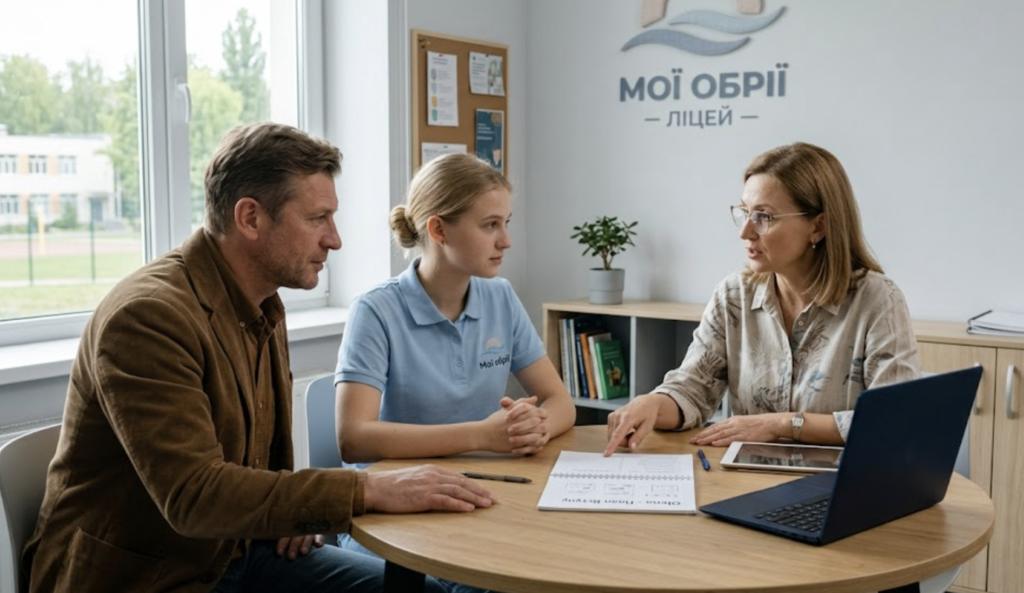
  • individual meetings with teachers and tutors;
  • parent clubs and thematic gatherings;
  • regular updates on a child’s progress and challenges.

It is the consistency of these interactions that creates a sense of involvement—when families know they are heard and supported by the school.

Діти виконують державний гімн України в ліцеї «Мої обрії».

What Children Gain from Adult Partnership

Children benefit the most from cooperation between adults. When the school and the family do not argue over “who is right,” but act as a team, children gain a sense of stability. They understand that adults are aligned, their words can be trusted, rules are clear, and expectations do not contradict one another. The world becomes more predictable, adults more reliable, and learning something that can be mastered without fear of constant mistakes.

In such an atmosphere, children are no longer afraid to talk about difficulties. They see that their questions are not ignored and that challenging topics are not avoided, but addressed together in search of solutions. At the same time, achievements are not taken for granted—they are noticed, discussed, and celebrated together. This builds intrinsic motivation: the desire to make an effort not “for a grade,” but because the result matters to the child personally.

Gradually, another important element emerges—a sense of support. Children understand that even if something does not work out, they will not be left alone. There are adults who will help, guide, support, and never humiliate. That is why the school–parent partnership at the “My Horizons” Lyceum is not a slogan, but a daily practice of trust. It makes the educational process holistic, and turns cooperation between teachers and families into a real resource that helps children grow, try new things with confidence, feel their own value, and gradually build their own path of development.

Success Stories of Students at the “My Horizons” Lyceum: Wins, Startups, and Research Projects

School years are not only about lessons and grades. They are an environment where character is shaped, first dreams emerge, and both small and major achievements are born. That is why it is so important to see real results, not just polished words in presentations. Today, we are sharing what we are especially proud of: the successes of students at the “My Horizons” Lyceum.

These are different stories. Some students are drawn to science, others create their own projects, while some find themselves in creativity or civic initiatives. What unites them all is the support of teachers, the belief of their families, and the child’s own willingness to work and not give up after the first mistake.

Victories in Olympiads and Competitions

Some of our lyceum students choose the path of deep academic immersion. They participate in city, national, and international intellectual competitions. For them, this is not only a test of knowledge, but also an opportunity to meet like-minded peers, experience a different level of challenges, and feel that their efforts bring real results.

Among the achievements are:

  • prize-winning places in Olympiads in mathematics, physics, computer science, and chemistry;
  • victories in language, literature, and history competitions;
  • participation and recognition in international online tournaments and intellectual marathons;
  • successful performances in citywide and national research competitions;
  • participation in projects of the Junior Academy of Sciences and specialized scientific schools;
  • special jury awards for creative and unconventional solutions to problems and projects.

These achievements are not about a “race for medals.” They show students that complex challenges are within reach and that knowledge opens doors to new educational opportunities in Ukraine and abroad.

Student Startups and Entrepreneurial Ideas

Another important area is student entrepreneurship. Teenagers experiment with creating their own products, apps, and social initiatives. Some projects emerge during coursework, while others are developed outside regular classes, when students form teams based on shared interests.

Most startup-related cases at “My Horizons” involve:

  • environmental initiatives;
  • small IT projects and mobile applications;
  • charitable and volunteer projects.

The value of these stories lies not only in financial outcomes. Students learn to work in teams, present ideas, take responsibility for results, accept feedback, and keep going after their first failures.

Глава закладу «Мої обрії» вітає дітей та команду педагогів.

Scientific Research and Project-Based Learning

Scientific and research work is an essential part of school life. Students work with mentors, formulate hypotheses, conduct experiments, and defend their projects at competitions and conferences. This provides experience of real scientific activity, not just following standard lab instructions.

It is here that many student achievements are born—achievements that later become the foundation for choosing a future profession. Some students continue their research at universities, participate in international programs, and enroll in prestigious educational institutions.

Why These Stories Matter

For us, it is not only medals, certificates, or photos on stage that matter. Much more valuable is the journey a child takes: from nervousness before a first presentation to confidently defending a project; from an uncertain “I probably can’t” to a calm “I want to try.” These kinds of achievements build inner resilience, teach students not to fear complex tasks, and help them understand that results come step by step.

Some students find their path in science, others in debates, and others in volunteer initiatives. In every case, behind the visible outcome are hours of preparation, doubts, working through mistakes, and the support of teachers and parents. These processes foster responsibility, independence, and the ability to see things through to completion.

Student achievements at the “My Horizons” Lyceum are always a team effort. They are the result of daily collaboration between students, families, and educators, and of an atmosphere of trust where mistakes are not shamed but analyzed and turned into lessons. This is how learning becomes not an “obligation,” but an opportunity to realize oneself, try something new, and gradually build one’s own path into the future.

Private Education in Ukraine: Myths and Reality

In recent years, interest in private education has been growing rapidly. Parents are increasingly considering alternatives to traditional public schools and seeking to understand whether investing in education truly pays off. Alongside this, many biases and misconceptions about private institutions have emerged. Some stem from outdated stereotypes, others from a lack of reliable information. To make a conscious choice, it is important to separate emotions from facts.

Below, we examine common myths and the real characteristics of studying at private schools, particularly when it comes to private lyceums in Kyiv.

Myths About Private Schools

Private education often finds itself at the center of debate. Some people consider it too expensive, others believe it is “detached from reality,” while some expect miraculous results without effort. From the outside, private institutions may appear closed or elitist, which fuels a whole system of stereotypes around them.

Parents ask themselves: Will there be excessive academic pressure? Will my child truly gain knowledge? Will learning turn into a simple “service without demands or responsibility”?

Below are the most common myths families encounter:

  • private schools “buy grades” instead of providing real knowledge;
  • only children from wealthy families study at private lyceums;
  • there is no discipline in such institutions;
  • private schools are isolated from real life.

These claims may sound convincing, but they are not universal. In reality, much depends on the specific school: its values, academic expectations, the professionalism of its teachers, and honesty in communication with parents. One private school may indeed be formal, while another may offer a strong academic foundation along with essential 21st-century skills. That is why it is important to look not at the label “private” or “public,” but at the actual content of the educational model and the environment in which your child will learn.

Учні з дипломами стоять у групі

What Private Education Really Offers

In most modern private lyceums, the focus is not only on test results, but on holistic development. Children are encouraged to discover their strengths, learn to work in teams, ask questions, and think critically. It is far more important not just to reproduce material, but to understand its practical value.

Private schools often have smaller class sizes, allowing teachers to give more attention to each student. Projects, debates, research assignments, and integrated lessons are actively used. This creates an environment where comfort is combined with high standards and responsibility.

Among the key advantages of private education are:

  • an individualized approach to learning pace and style;
  • close cooperation between the school and the family;
  • modern educational programs and opportunities for specialized learning.

It is important to emphasize that a private school is not an “easier path,” but a different format of organizing education—one where attention to the individual goes hand in hand with high expectations for results.

Annual Scientific Colloquium at the My Horizons Lyceum focused on inspiring children to make a positive impact on the world.

Who Private Lyceums Are For

Private institutions are not a universal solution for everyone. They are best suited for children who need individual support, a safe atmosphere, and flexible educational pathways. For active, curious, and creative students, this can be an environment for rapid growth.

At the same time, it is important that the family shares the school’s values and is ready for partnership. Private education implies more active parental involvement in the educational process and ongoing interaction with teachers.

Thus, when it comes to private lyceums in Kyiv, the key factor is not the status of the institution, but how well its approach matches the needs of a particular child. An informed choice removes most fears and reveals the real picture: private education is primarily about responsibility, respect for individuality, and modern opportunities for development.

How to Choose a Private Lyceum: 12 Criteria to Pay Attention To

When parents start thinking about how to choose a private lyceum, it is important to rely not only on intuition, but also on a clear checklist. The education market offers many options, and it is easy to get lost among attractive websites and glossy presentations. A thoughtful approach helps: carefully looking at the conditions, atmosphere, curriculum, and the people who work with children.

This is especially relevant for those considering private schools in Kyiv. The choice is wide, so it is important to see the difference between appealing promises and the school’s real day-to-day work.

12 key criteria for choosing a school

Before making a decision, it is useful to pause for a moment and separate emotions from concrete facts. A school may seem appealing at first glance or come highly recommended by friends, but it is important to look deeper: how the learning process is organized, how adults communicate with children, whether the environment is safe, and whether a child might get lost in a large community. That is why a practical checklist helps to see the full picture without embellishment and understand how well a school matches a family’s expectations.

Below is a list of criteria that helps parents evaluate a school comprehensively—from documentation to atmosphere. These are the school selection criteria worth paying attention to first:

  1. License and official status of the educational institution.
  2. Class size and the possibility of individual attention.
  3. Qualifications and stability of the teaching staff.
  4. Educational program and availability of specialized tracks.
  5. Level of safety and medical support.
  6. Psychological support and a friendly school atmosphere.
  7. Facilities and infrastructure: classrooms, laboratories, sports spaces.
  8. Foreign language learning and international opportunities.
  9. School–parent partnership and openness of communication.
  10. Daily schedule: meals, after-school care, extracurricular activities.
  11. Assessment system and feedback for students and parents.
  12. School values and reputation among families and alumni.

It is worth evaluating each point and honestly answering yourself: which of these are truly critical for your family, and which may be secondary.

Діти з батьками.

How to use this checklist effectively

The best way to avoid mistakes is to combine rational analysis with personal impressions. Visit the school, walk through the corridors, observe lessons, and ask questions. Often, the answer to how to choose a private lyceum appears when you see how teachers speak to children, whether there is laughter during breaks, and how adults respond to challenging situations.

It is helpful to complete this checklist after visiting each school. This makes the differences between schools much more visible.

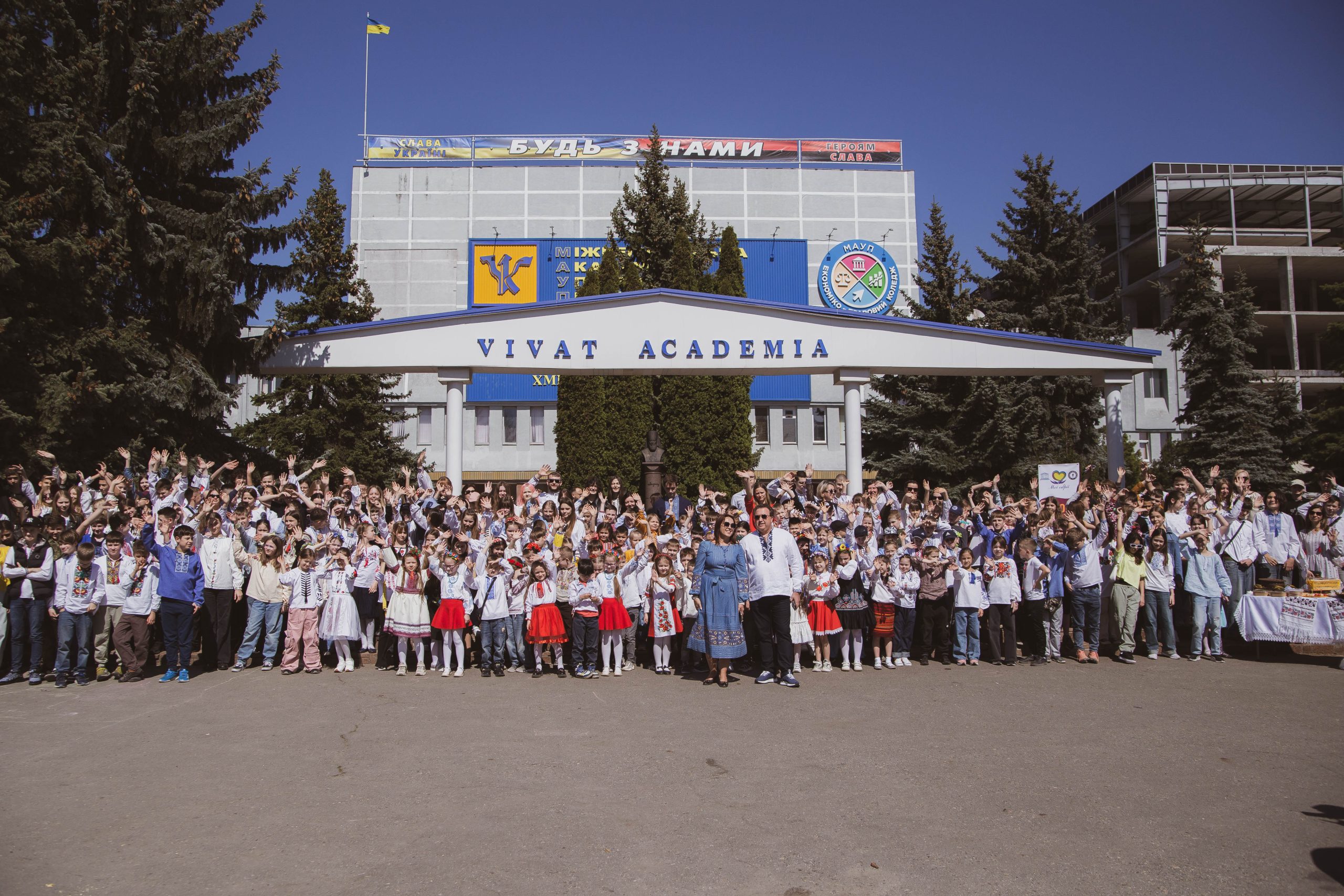
Діти ліцею та садочка «Мої обрії» у вишиванках на святі.

What parents should keep in mind

What parents should always remember is that a child spends a significant part of their day at school. There, they not only learn, but also make friends, make mistakes, experience successes and setbacks. That is why no tables, reviews, or rankings can replace a simple, honest question: “How do you feel there?” After visiting a school, it is important to talk with your child not only about whether they liked it or not, but also about what scared them, what surprised them, which teachers they remember, and whether they would like to come back.

Sometimes a school looks perfect to adults: a beautiful website, modern classrooms, a strong curriculum. But the child may feel tension, fear, excessive pressure, or indifference. In such cases, it is important to listen to these signals and not dismiss them with phrases like “you’ll get used to it” or “it’s a prestigious school.” A child needs a space where they can be themselves, ask questions, and not be afraid of being judged for mistakes.

When a careful analysis of learning conditions is combined with respect for a child’s emotions, choosing among private schools in Kyiv becomes calmer and more conscious. In the end, what matters is not only the program a school offers, but whether it becomes a place where the child is seen, supported, and helped to unlock their potential—in learning, communication, creativity, and their future profession.