
- Content
The space of an apartment or house often seems to us, adults, like an ordinary place for daily life, but for a preschooler it is a true laboratory. Every pot in the kitchen, every pillow in the living room, or even simple colorful socks can become the main characters in an exciting game. The most important thing in home learning is not the number of expensive toys, but your willingness to forget about chores for a few minutes and immerse yourself in your child’s world.
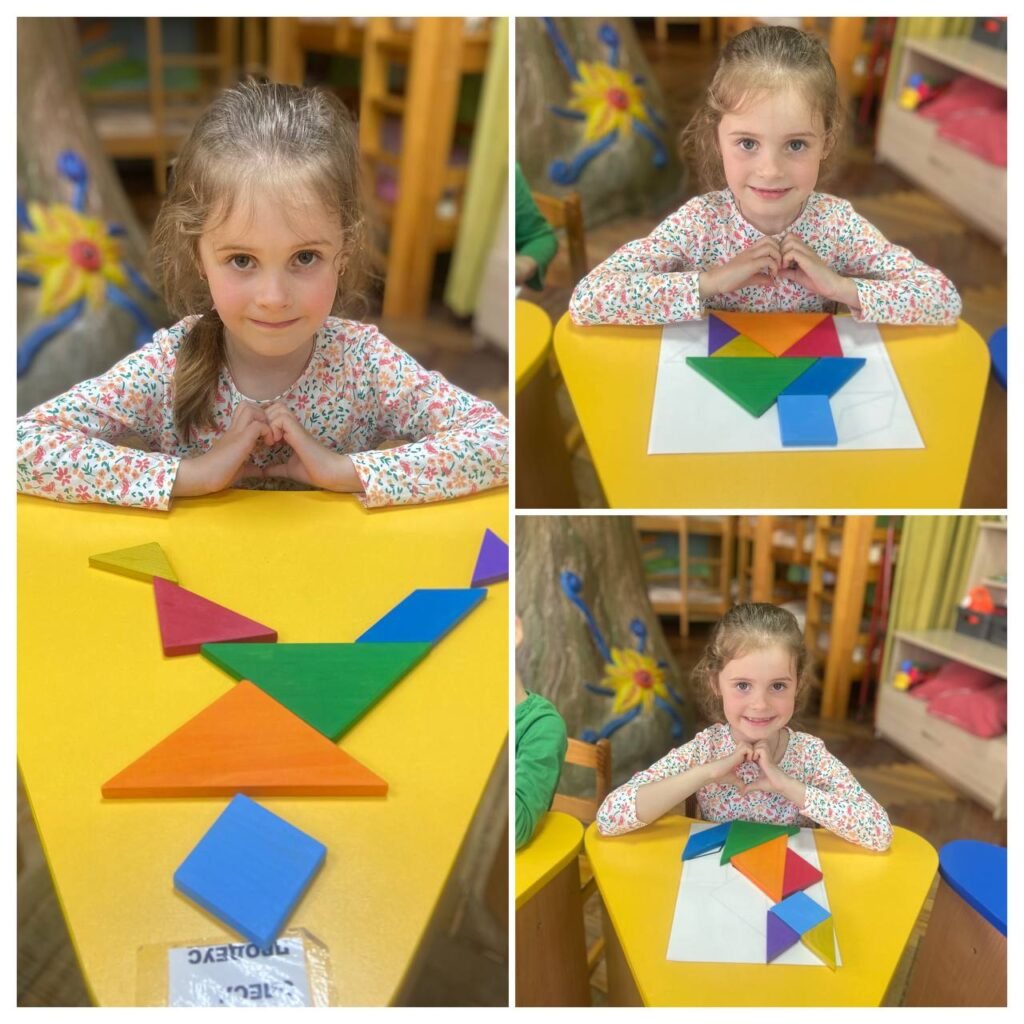
Educational Games — Thinking
A child’s thinking develops through concrete actions. While they touch, twist, stack, or scatter objects, millions of new neural connections are formed in their brain. The task of parents at home is not so much to “teach” as to create conditions where this natural curiosity is encouraged. It is important to give the child the opportunity to find solutions independently, even if they seem completely obvious to you.
When we teach a child to think independently, we give them far more than just knowledge of facts. We give them a tool for adapting to the future.
Logic
Logical thinking is the ability to see patterns and hidden connections. In preschool age, it is best developed through simple sorting and classification of objects. There is no need to buy special cards or expensive sets. Look around, and you will find dozens of objects for developing logic right at your fingertips.
Here are a few ideas to engage your child while stimulating their mind:
- “What doesn’t belong?” Place three apples and one spoon in front of the child. Let them not only point to the odd item but also explain why the spoon doesn’t belong.
- “Treasure hunt” Describe an object in the room by its features (for example: red, round, soft), and the child has to guess and bring it to you.
- “Continue the sequence” Create a pattern using buttons or colored pencils (blue, yellow, blue…) and ask the child to add the next element.
- “Sort by feature” Ask the child to put toys away not just into one box, but to sort them by color, shape, or material (wooden separately from plastic).
These exercises help the child focus and teach them to notice small details. It is important not to correct the child immediately if they make a mistake. Instead, ask: “Why did you decide to put this button here?” — giving them a chance to find their own reasoning and correct themselves.
Active Games — Movement
Movement is the foundation of life, and for a preschooler this phrase has a literal meaning. Physical activity at this age is directly connected to intellectual development. When a child runs, jumps, or tries to keep balance, their brain learns to process signals from the vestibular system and muscles. At home, where space is often limited, it is important to come up with games that are safe yet sufficiently active.
Constant activity helps a child better understand their body boundaries and teaches them to manage their energy.
Coordination
The ability to control one’s body gives a child confidence not only on the playground but also in everyday life. Coordination is not only about sports—it is also about being careful, sensing boundaries, and avoiding injuries. Even an ordinary pillow placed on the floor can become an “island” that the child must jump onto accurately to avoid falling into the “ocean” of cold laminate flooring.
You can try the following active games:
- “Tightrope walker” Stick a line of masking tape on the floor and ask the child to walk along it with arms stretched out, as if performing in a circus.
- “Obstacle course” Build a route with chairs to crawl under and boxes to carefully jump into.
- “Mirror” Stand opposite the child and make slow movements with your arms or legs, while the child tries to copy them as accurately as possible, synchronizing with you.
Such activities allow the child to release accumulated energy, especially when it’s raining outside and a walk is canceled. The key is to remember safety precautions and remove sharp or fragile objects from the path of your little explorer.
Playing together at home makes the bond between parents and children much stronger. For a child, nothing is more valuable than your full presence and attention. Don’t be afraid to be funny, invent unusual rules, and sincerely celebrate your child’s small achievements. Each such moment is an important brick in the foundation of their happy and harmonious future.
Educational games for children at home.