
- Content
War is a challenge not only for adults but also for children. Even if a child does not witness danger directly, they can keenly sense changes in the voices, behavior, and moods of the adults around them. A child’s world is, first and foremost, the world of their loved ones’ emotions, so any fear, anxiety, or confusion felt by parents is instantly reflected in the child. In such times, psychological support for children becomes essential — it helps them preserve a sense of safety and trust in the world.
Signs of Child Stress: What to Look Out For
From the perspective of child psychology, stress in children is not always immediately visible. A child may not directly express fear, yet their body and behavior often “speak” louder than words. It’s important to pay attention if you notice:
- frequent tears, irritability, or sudden emotional outbursts;
- sleep problems, reluctance to go to school, or avoidance of peers;
- excessive anxiety or, on the contrary, indifference and fatigue;
- loss of interest in favorite activities such as drawing or playing.
When we talk about childhood stress, it’s essential to remember: it is not a sign of weakness but a natural reaction to instability in the world around them. The role of adults is not to suppress these emotions but to help the child experience and release them without fear.
How to Help a Child During War: The Role of Parents
Sometimes the simplest actions offer the greatest support. What seems ordinary to adults can represent stability and safety for a child.
Tips for parents:
- Speak honestly, but calmly. There’s no need to go into graphic details, but it’s important to reassure your child that you are near and in control. Use simple, caring words to explain what’s happening — without unnecessary drama.
- Maintain routines. Familiar daily rituals — morning tea, a shared prayer, or a bedtime story — help children feel that life goes on and that the world still has meaning.
- Be an example of resilience. Children imitate not words but reactions. When parents remain calm even in difficult circumstances, the child feels safe and knows they can rely on them.
- Allow emotions to exist. If a child cries, stays silent, draws, or asks questions — don’t stop them. This is their way of processing emotions and restoring balance.
Parents are their children’s first psychologists. Their presence, hugs, and attentive listening often mean more than any words. Support during wartime begins at home — with the warmth, peace, and love a child feels every day.
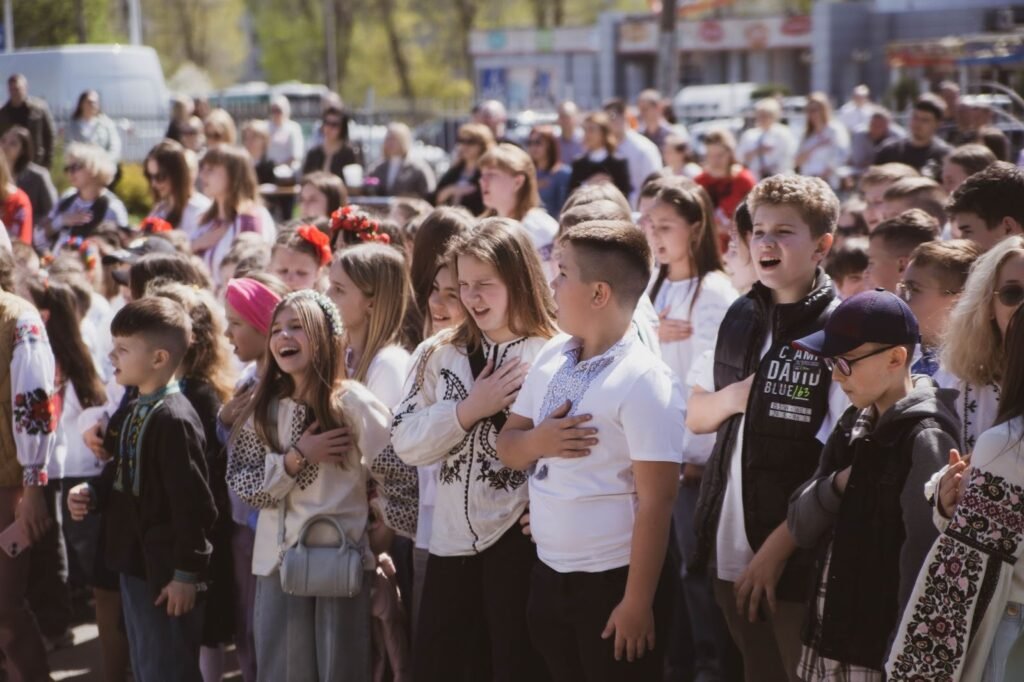
How We Reduce Tension in the Classroom: Advice from the Teachers of “My Horizons” Lyceum
For many children today, school is not only a place of learning but also a space for recovery. It is here that a child learns to trust the world again, finds stability, and regains a sense of safety. In such times, it is especially important to know how to help a child during war — how to restore calm, confidence, and the desire to learn.
At My Horizons Lyceum, we begin each day with simple yet meaningful routines — a short conversation about mood, feelings, and what may be worrying the students. We teach children to notice and name their emotions, to express their feelings with words rather than behavior. This practice becomes the first step toward emotional healing and smooth adaptation to the learning process.
We actively use art therapy methods — drawing, sand play, music, and movement games. Through creativity, children learn to process emotions rather than withdraw into themselves.
A special role is given to mutual support in the classroom. We organize group tasks and joint projects where students help each other, learn to listen, and show empathy. This is not just education — it’s a school of empathy and trust.
Everything we do is based on one belief: learning is only possible where a child feels safe.
That’s why care, acceptance, and a friendly atmosphere are not additions to the lesson — they are its very heart.
Everything we do is based on one belief: learning is only possible where a child feels safe.