
- Content
Modern children need far more than just strong knowledge of school subjects. It is important to understand how money works, how to plan expenses, and how to make responsible decisions. That is why financial literacy receives significant attention at the “My Horizons” Lyceum. It is not an “extra club,” but part of the learning culture that helps children feel confident in real life.
The program is designed so that complex economic concepts are explained in simple language through everyday examples. Children discuss situations they encounter daily: pocket money, purchases, savings goals, charity, and the family budget. This helps build a natural understanding of the value of money and one’s own work.
Why financial literacy is important already at school
Teenagers quickly enter a world where financial decisions must be made. Mistakes along this path can be costly—not only financially, but also in terms of self-confidence. That is why we begin working with the idea of responsible resource management already at school age.
Financial literacy helps children overcome fear of numbers and planning. They learn to set goals, see the path to achieving them, and assess risks. For many, this becomes the first step toward adulthood—calm, conscious, and independent.
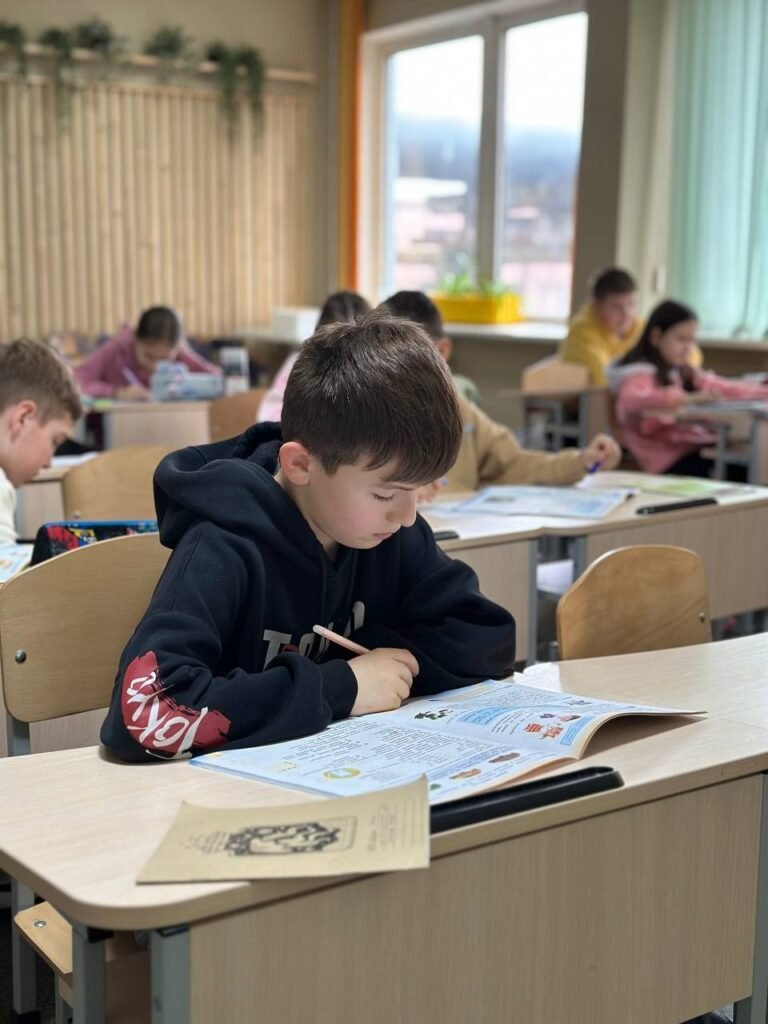
What the economic education program includes
The program is built gradually: from the simplest concepts to more complex economic processes. Students do not just listen to theory, but actively participate in role-playing games, scenario simulations, and small “entrepreneurial” projects.
Throughout their studies, children become familiar with the core components of what we call economic education:
- planning a personal and family budget;
- saving, accumulation, and responsible spending;
- basic understanding of investments and entrepreneurship.
After the list, it is important to emphasize that this is not about imposing “right” decisions. Children are taught to analyze situations and draw their own conclusions, while adults support them and help them see the consequences of their choices.

Practical skills for real life
At the “My Horizons” Lyceum, we deliberately focus on practice. Students learn not only to calculate money, but also to talk about finances openly and responsibly. They understand the difference between wants and needs, learn to plan long-term purchases, evaluate advertising critically, and avoid impulsive decisions.
Such lessons increase independence and self-confidence. Children see that they can manage their resources rather than simply go with the flow. This will be useful in upper secondary school, university, a first job, and their own projects.
Financial literacy as part of developing a responsible individual
For us, it is important not just to give a child a set of formulas, terms, and rules. At the “My Horizons” Lyceum, we take a broader view: we want students to be able to plan, understand the consequences of their decisions, respect the work of others, and value their own time. That is why financial literacy does not exist in isolation, but is naturally connected to leadership, project-based learning, teamwork, and personal development.
Gradually, children arrive at an important realization: money is not the goal of life, but a tool that one must know how to use. In class, they learn to weigh “wants” against “needs,” track expenses, plan purchases, and pause before making impulsive decisions. This forms the habit of thinking ahead, analyzing information, and taking considered steps rather than acting purely on emotion.
Step by step, this is how true adulthood is built—calm, conscious, and responsible. Children who become familiar with the basics of financial literacy from an early age feel more comfortable in the world of adult financial decisions: from pocket money to a first salary and personal projects. They enter the future without unnecessary fear, with the understanding that they can manage their resources rather than simply adapt to circumstances.
How children learn the basics of economics, entrepreneurship, and responsible money management.